


Wine Basics

Wine Investing

Apr 24, 2025

Producer Spotlight: Domaine Leflaive

Investing in Domaine Leflaive

Overview

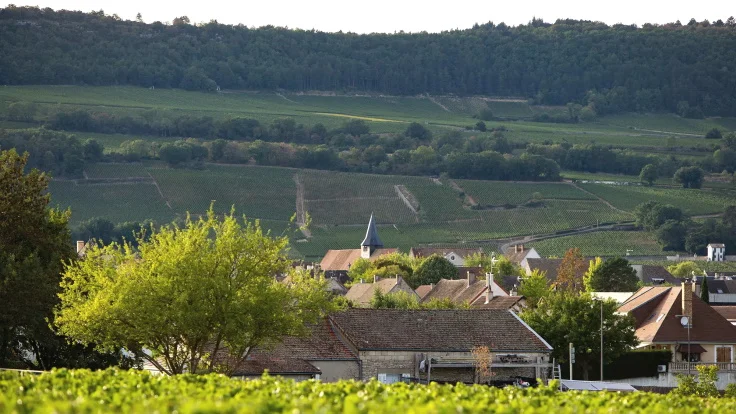
In the heart of Puligny-Montrachet, where some of Burgundy’s most revered vineyards lie, Domaine Leflaive stands as a benchmark for fine white wine. Founded in the early 20th century by Joseph Leflaive, the domaine began as a revitalisation project, replanting and nurturing vines devastated by phylloxera. Over time, its reputation grew, not just for the prestige of its holdings but for the purity, precision, and longevity of its wines.

The modern era was shaped by Anne-Claude Leflaive, who took the helm in the 1990s and became a pioneer of biodynamic viticulture in Burgundy.
Her belief in the intimate connection between healthy soils and vibrant wines led to practices that were radical at the time - eschewing chemicals, working with the rhythms of nature, and treating each parcel as a living ecosystem. The results spoke for themselves: Chardonnays of remarkable depth, minerality, and finesse.

Today, under the leadership of Brice de La Morandière, the domaine continues this legacy, producing wines from grand crus like Montrachet, Chevalier-Montrachet, and Bâtard-Montrachet that are coveted worldwide. Drinking a Leflaive is to taste the soul of Puligny—elegance, purity, and a sense of place that lingers long after the last sip.

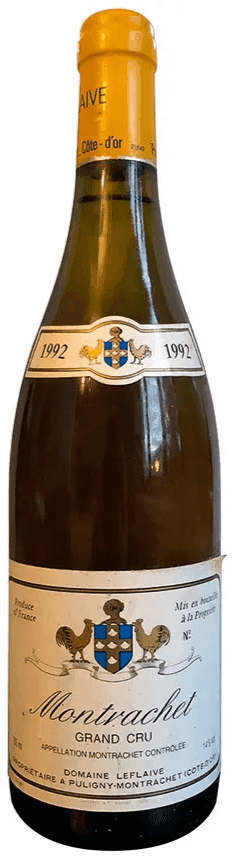
Quick Facts - Domaine Leflaive - Montrachet Grand Cru

Attribute

Details

Region

Montrachet, Côte de Beaune, Burgundy, France

Grape Varieties

Chardonnay

First Vintage

1992

Critically Acclaimed Vintages

1998, 2002, 2010, 2015, and 2018

Average Critic Ratings

95 Points

Current Market Liquidity

Rare

Drinking Window

15–20 years

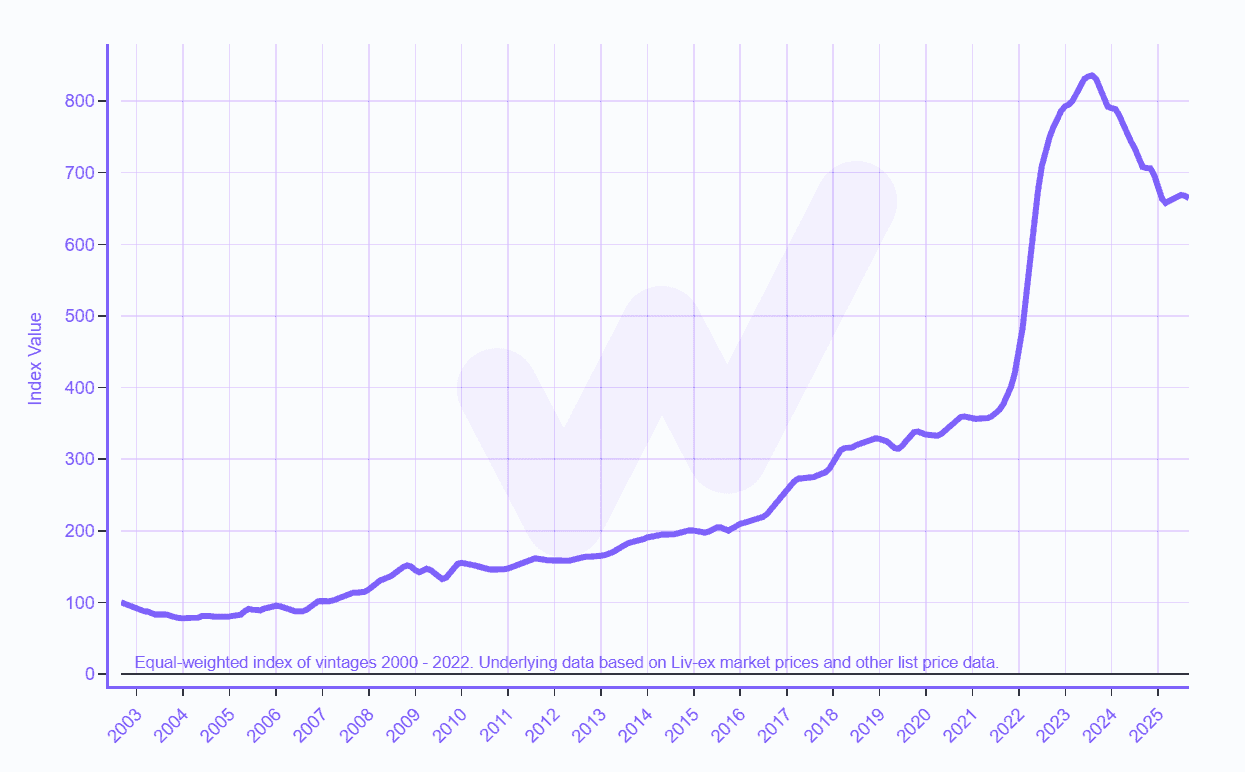
Domaine Leflaive Montrachet Grand Cru Label Index Tracker

Analyst Note - From Matthew Small (Head of Investment)

Domaine Leflaive ranks among Burgundy’s most celebrated white wine estates, with an exceptional portfolio of Premier Cru sites and four Grand Crus, including the illustrious Montrachet. Leflaive’s Montrachet Grand Cru, the estate’s flagship, is produced only in top vintages and never commercially released, making it exceptionally rare and highly sought after. Limited to a few hundred bottles each vintage, it attracts intense collector demand. Over the past decade, Montrachet has delivered an impressive average annual CAGR of 12.9% and an average critic score of 95. Leflaive’s low regional beta of 0.27 offers investors not only robust returns but also valuable diversification.

Dinner Party Story

In the early 1990s, Anne-Claude Leflaive began converting the estate’s vineyards to biodynamic farming—something very unconventional for a prestigious Burgundian domaine at the time. She even commissioned soil studies to convince skeptical family members, and ultimately converted the entire estate by 1998. Her courage not only saved struggling old vines in Bienvenues-Bâtard-Montrachet, but inspired a wider shift toward biodynamics across Burgundy

Enjoyed the article? Spread the news!

Read More

Producer

Wine Basics

Nov 24, 2025

Producer Spotlight: Pierre Péters – Les Chétillons

Investing in Pierre Péters – Les Chétillons


Producer

Wine Basics

Nov 24, 2025

Producer Spotlight: Château Rayas

Investing in Château Rayas


Wine Investing

Oct 15, 2025

How To Spot a Wine Investment Scam

Written by Callum Woodcock, WineFi's CEO

In August 2025, three people were convicted of fraudulent trading relating to a complex wine fraud run by Imperial Wines and Spirits Merchants Ltd.

The scam involved extortionate mark-ups, sometimes as high as 400%, on what appear to have been legitimately investment-grade wines like Chateau Mouton-Rothschild. At the same time, the company falsely led prospective clients to believe that Imperial did not make any money at all until the wines were sold for a profit.

Whilst most clients did actually own the wines they were told they had purchased, a number of victims had no wine at all despite paying thousands of pounds.

What is most striking is that this company was in operation for a decade — from 2008 to 2018, when their offices were finally raided by Trading Standards.

Given the esoteric nature of fine wine as an asset class, most investors choose to invest through a dedicated company — be it a merchant or a specialist fine wine investment firm.

While there are many reputable operators, the unregulated status of the market inevitably attracts its share of bad actors — from deliberate fraudsters to the merely incompetent.

The good news is that it is surprisingly easy to distinguish credible operators from questionable ones — provided you know what to look for.

There are three key questions to ask when investing in wine.

1. Are you being ripped off?

Fine wine is unique amongst collectibles in that it has a third-party “list price”. These are not firm bids but asking prices — a lot like residential property. These prices serve as a yardstick for what the wines are worth at the time of purchase.

There are a number of publicly-available platforms that allow you to search for a wine based on producer and vintage — for example, Wine Searcher.

Filtering the location as the United Kingdom and only choosing wines that are “In Bond” should give you a more accurate picture. GBP prices are the de facto international reference given the UK is the largest global hub for fine wine trading.

You’ll quickly be able to get a sense of whether the price you are paying is fair or inflated.

The ease with which investors can validate this makes the Imperial Wines scam sadder, as it was entirely avoidable. They appear to have intentionally targeted "confused pensioners" who were less likely to be tech-savvy.

How WineFi Does It

So, what does "good" look like?

At WineFi, we show both the Liv-ex Market Price and the lowest Wine Searcher price on our platform to provide investors with an independent benchmark of what their portfolio is worth. We also compare our syndicate performance against market indices

We do this so investors never have to "take our word" for what their wines are worth, and can judge our benchmark our performance against the broader wine market.

2. Does your wine actually exist?

Given fine wine must be stored “in bond” (meaning in a government bonded warehouse to protect its resale value — more on why here) there is a third-party custodian that should be able to verify which wines are stored under your name, and whether they are ring-fenced.

You should be able to communicate directly with the warehouse (they are your wines, after all) rather than simply your broker in order to verify that your holdings are where you believe them to be.

One well-publicised whisky investment scam was exposed when a client began calling the warehouse where he casks were supposedly stored — only to find that they weren’t there.

How WineFi does it

At WineFi, we store wines with Coterie Vaults.

Fine wines held by both our syndicates and private clients are stored under the names of the individual owners, allowing our clients to independently verify their existence and ownership by contacting the warehouse.

They are ring-fenced from our own account to ensure that even in the event WineFi was to cease trading they remain the property of our underlying investors.

  1. Is your wine actually worth anything?

This is a personal bête noire.

In recent years, we have seen a number of “investment” portfolios containing wines that have no secondary market price.

Given wine pays no yield, the only way to make money investing in this asset class is to eventually sell the wines on the secondary market.

If that secondary market does not exist, that particular wine has no resale value and therefore cannot be considered investment-grade.

Secondary market liquidity is therefore of critical importance when considering what to invest in.

This is where the water gets murky.

If you are looking to speculate on which producers are likely to break through in the future, you may be comfortable with this. However, these wines — by default — have no independent secondary market price.

Most investors are not looking to take moonshot punts on the next breakout producer, and yet we are regularly sent portfolios for review that are comprised of dozens of non investment-grade wines which still show a “market price” — which can only have come from the broker and is therefore unverifiable.

Until there is a trade on the secondary market, the value of that particular wine is zero.

How WineFi does it

At WineFi, secondary market liquidity and brand equity are two of the key factors that we examine when selecting portfolios.

We currently offer free portfolio reviews to those who have concerns about their holdings. To try and fight this issue at scale, we are developing a free application that will allow anyone to upload a CSV of their holdings and identify the investment-worthiness of their portfolios.

Conclusion

Fine wine can be both a compelling investment. However, as an unregulated asset class with significant information asymmetry between buyers and sellers, it can also create opportunities for misconduct.

While the market is becoming more professionalised and transparent, bad behaviour persists.

The best protection is to do your own research: check Trustpilot reviews for the company you are working with, and familiarise yourself with the best-practice principles outlined above.

If you’re already a wine investor and would like WineFi to review your portfolio — with no fee, no obligation, and no upsell — we’d be happy to take a look.

For more information, get in touch with our investment team.


Build your wine portfolio today!

Gain exposure to the wine markets in just a few clicks.

By submitting this form you are agreeing to our Terms & Conditions and Privacy Policy.

Build your wine portfolio today!

Gain exposure to the wine markets in just a few clicks.

By submitting this form you are agreeing to our Terms & Conditions and Privacy Policy.

Build your wine portfolio today!

Gain exposure to the wine markets in just a few clicks.

By submitting this form you are agreeing to our Terms & Conditions and Privacy Policy.

Build your wine portfolio today!

Gain exposure to the wine markets in just a few clicks.

By submitting this form you are agreeing to our Terms & Conditions and Privacy Policy.

Podcast

Check out our latest episode or visit our Spotify to discover more.

Podcast

Check out our latest episode or visit our Spotify to discover more.

Podcast

Check out our latest episode or visit our Spotify to discover more.

Podcast

Check out our latest episode or visit our Spotify to discover more.

Join our newsletter

Get the latest WineFi news and press delivered straight to your inbox.

Capital is at risk. Wine values can go down as well as up, and investments may not perform as expected. Returns may vary. You should not invest more than you can afford to lose. WineFi is not authorised by the Financial Conduct Authority. Investments are not regulated and you will have no access to the Financial Services Compensation Scheme (FSCS) or the Financial Ombudsman Service (FOS). Past performance and forecasts are not reliable indicators of future results and should not be relied on. Forecasts are based on WineFi’s own internal calculations and opinions and may change. Investments are illiquid. Once invested, you are committed for the full term. Tax treatment depends on individual circumstances and may change.

You are advised to obtain appropriate tax or investment advice where necessary.

WineFi is a trading name of WineFi Management Limited. Registered in England and Wales with registration number: 14864655 and whose registered office is at 5th Floor, 167-169 Great Portland Street, London, United Kingdom, W1W 5PF.

Join our newsletter

Get the latest WineFi news and press delivered straight to your inbox.

Capital is at risk. Wine values can go down as well as up, and investments may not perform as expected. Returns may vary. You should not invest more than you can afford to lose. WineFi is not authorised by the Financial Conduct Authority. Investments are not regulated and you will have no access to the Financial Services Compensation Scheme (FSCS) or the Financial Ombudsman Service (FOS). Past performance and forecasts are not reliable indicators of future results and should not be relied on. Forecasts are based on WineFi’s own internal calculations and opinions and may change. Investments are illiquid. Once invested, you are committed for the full term. Tax treatment depends on individual circumstances and may change.

You are advised to obtain appropriate tax or investment advice where necessary.

WineFi is a trading name of WineFi Management Limited. Registered in England and Wales with registration number: 14864655 and whose registered office is at 5th Floor, 167-169 Great Portland Street, London, United Kingdom, W1W 5PF.

Join our newsletter

Get the latest WineFi news and press delivered straight to your inbox.

Capital is at risk. Wine values can go down as well as up, and investments may not perform as expected. Returns may vary. You should not invest more than you can afford to lose. WineFi is not authorised by the Financial Conduct Authority. Investments are not regulated and you will have no access to the Financial Services Compensation Scheme (FSCS) or the Financial Ombudsman Service (FOS). Past performance and forecasts are not reliable indicators of future results and should not be relied on. Forecasts are based on WineFi’s own internal calculations and opinions and may change. Investments are illiquid. Once invested, you are committed for the full term. Tax treatment depends on individual circumstances and may change.

You are advised to obtain appropriate tax or investment advice where necessary.

WineFi is a trading name of WineFi Management Limited. Registered in England and Wales with registration number: 14864655 and whose registered office is at 5th Floor, 167-169 Great Portland Street, London, United Kingdom, W1W 5PF.

Join our newsletter

Get the latest WineFi news and press delivered straight to your inbox.

Capital is at risk. Wine values can go down as well as up, and investments may not perform as expected. Returns may vary. You should not invest more than you can afford to lose. WineFi is not authorised by the Financial Conduct Authority. Investments are not regulated and you will have no access to the Financial Services Compensation Scheme (FSCS) or the Financial Ombudsman Service (FOS). Past performance and forecasts are not reliable indicators of future results and should not be relied on. Forecasts are based on WineFi’s own internal calculations and opinions and may change. Investments are illiquid. Once invested, you are committed for the full term. Tax treatment depends on individual circumstances and may change.

You are advised to obtain appropriate tax or investment advice where necessary.

WineFi is a trading name of WineFi Management Limited. Registered in England and Wales with registration number: 14864655 and whose registered office is at 5th Floor, 167-169 Great Portland Street, London, United Kingdom, W1W 5PF.