


TL;DR
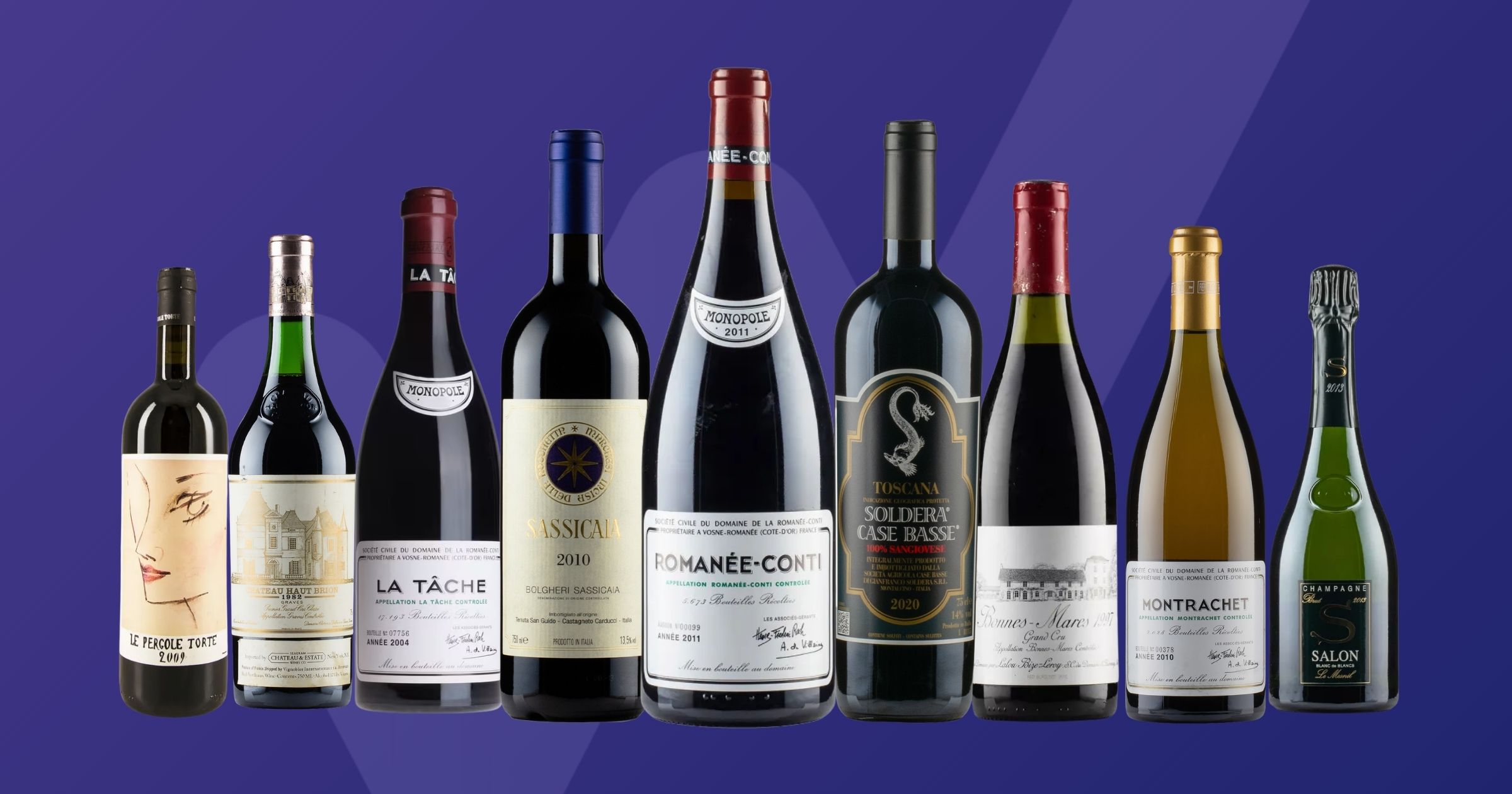
The vast majority of wine produced globally is not suitable for investment. We estimate that the investable universe of fine wine is approximately $5.5bn, representing only a fraction of a percent of global wine production. Investment-grade wine is best defined not by quality or rarity alone, but by market behaviour. To be considered suitable for long-term capital allocation, a wine must pass a five-factor test: it needs an established secondary market, recognised provenance, liquidity at scale, a proven track record of demand, and limited, predictable supply.
What exactly is an investment-grade wine?
While many wines may be rare, expensive, or highly regarded, only a small subset consistently trades on secondary markets with sufficient liquidity, price transparency, and buyer depth to support long-term capital allocation. This narrowness is a feature, not a flaw. It reflects the fact that investment-grade wine is defined by sustained market demand, repeatable liquidity, and recognised provenance, rather than by quality or rarity alone.
The global wine industry produces billions of bottles annually, but the secondary market focuses on a remarkably small fraction of that output. Quality is subjective, but market behaviour is measurable. For a wine to be considered an asset, it must transition from a consumptive good into a globally traded unit of value.
What has emerged is not a uniformly investable market, but a bifurcated one: a small, highly liquid core of globally traded wines, and a long tail where price discovery and exit remain uncertain. Outcomes in wine investing are driven far more by selection within this small investable universe than by broad exposure to the wine market as a whole. To systematically identify these assets, WineFi applies a strict criteria based on five defining characteristics.
Factor 1: Established secondary markets
Investment-grade wines trade regularly between buyers and sellers, allowing prices to be observed and realised rather than merely quoted. This, more than any other factor, is critical. If a wine has no secondary market value, it is not an investment-grade wine.
The existence of a secondary market transforms a bottle of wine into an investable asset. The emergence of online trading platforms and price indices, most notably Liv-ex, introduced trade-based pricing, benchmarks, and the language of portfolio construction. When an asset trades regularly, investors can track its historical performance, analyse its volatility, and model its future trajectory.
Without this active trading environment, an investor holds an illiquid collectible. A winery might release a limited-edition bottle at a high retail price, but if no independent buyers are willing to purchase it later on the open market, the retail price is irrelevant. Prices in the fine wine market are formed through discrete transactions rather than constant marking-to-market. The secondary market acts as the ultimate arbiter of value, which makes observable trading data essential.
Factor 2: Recognised provenance and classification
Investment-grade wines are produced within clearly defined appellations or classifications that the market accepts as meaningful and durable. This structural protection ensures that the origin and production standards of the asset remain unquestioned over decades.
In regions like Bordeaux and Burgundy, strict appellation rules define exactly where grapes can be grown and how wines must be produced. The 1855 Classification in Bordeaux established a durable hierarchy of classified growths that continues to anchor global demand and pricing today. Similarly, Burgundy relies on a vineyard-led system, ranking sites as Grand Cru, Premier Cru, Village, or Regional based on terroir.
Beyond regional classification, provenance refers to the documented history of a bottle from release to the present day: where it was sourced, how it was handled, and how it has been stored. To preserve resale value, investment-grade wine should be stored in bond, meaning in a government-approved bonded warehouse. Continuous bonded storage ensures that the wine has remained in a verified environment throughout its life. Once a wine leaves bond, storage conditions and handling can no longer be reliably verified, and resale confidence is materially reduced.
Factor 3: Liquidity at scale
There must be sufficient depth of buyers to allow exits without excessive price concession, particularly in standard bottle formats. An asset is only useful in a portfolio if it can be sold efficiently when required.
Fine wine is not a daily-traded asset. While leading producers benefit from active secondary markets, liquidity can dry up during periods of market stress, extending holding periods or forcing sales at sub-optimal prices. Liquidity is not uniform across the fine wine market and must be selected for carefully. Prime property sells more easily than fringe stock, and likewise, blue-chip wines trade far more readily than obscure or speculative bottles.
Investors must differentiate between wines that are rare and wines that are liquid. Rarity alone is not enough. Many wines become scarce simply because they were never widely produced or widely consumed. Without ongoing demand and an active secondary market, scarcity results in illiquidity rather than value.
Factor 4: Proven track record of demand
Demand for an investment-grade wine is sustained across time and geographies, rather than driven by short-term fashion or critical hype. True blue-chip producers maintain their appeal across economic cycles and changing consumer trends.
While great wine is made all over the world, only a small number of regions consistently meet the criteria required for serious, repeatable investment: global demand, long track records, deep secondary-market liquidity, and clear quality hierarchies. At WineFi, we consider just seven regions "investment-grade". These include Bordeaux, Burgundy, Champagne, Tuscany, Piedmont, the Rhone Valley, and Napa Valley.
Demand for these wines is global and not tied to the economic fortunes or regulation of a single country or city. A bottle of Burgundy trades in London, Hong Kong, New York and Singapore with the same reference price. This global footprint acts as a stabiliser. If demand softens in one region due to local economic conditions, strong demand in another region can help maintain price levels. A proven, multi-decade track record of international demand is what separates enduring assets from passing trends.
Factor 5: Limited and predictable supply
Production volumes must be constrained by vintage, geography, and regulation, with little scope for expansion. The fine wine market exhibits classic supply and demand dynamics, where the total number of bottles available is permanently capped upon release.
Producers cannot simply grow more of the same wine in response to rising demand, nor can new supply be created elsewhere and treated as equivalent by the market. In France, appellation rules define exactly where grapes can be grown and how wines must be produced. In Italy, similar controls exist through the DOC and DOCG systems, which legally restrict production zones, grape varieties, yields, and winemaking methods.
Furthermore, as wines improve with age and bottles are consumed, lost, or damaged, the available supply steadily declines. Scarcity is therefore structural and irreversible. When this diminishing supply meets growing global wealth and collector interest, it creates the fundamental pressure that drives long-term price appreciation.
How investment-grade criteria connect to your portfolio
Understanding the five-factor test is the first step in treating fine wine as a serious alternative asset. It shifts the focus away from subjective tasting notes and places it firmly on market mechanics, liquidity, and verifiable data. At WineFi, our quantitative approach - built on our proprietary WineFi Investment Score (WIS) - relies on these principles to filter out the noise and focus purely on the $5.5bn investable universe.
By applying disciplined asset selection, investors can avoid the long tail of illiquid bottles and concentrate on wines that behave predictably within a broader investment strategy. If you are ready to explore the data behind these market dynamics, you can read more in our comprehensive 2026 Fine Wine Investment Guide. For those looking to take the next step, sign up to view our current investment opportunities.
Frequently asked questions
What is an investment-grade wine?
An investment-grade wine is a bottle that consistently trades on the secondary market with sufficient liquidity, price transparency, and buyer depth to support long-term capital allocation. It is defined by market behaviour, not just subjective quality or rarity.
Why is a secondary market important for wine investment?
A secondary market allows prices to be observed and realised. Without platforms where buyers and sellers regularly trade, a wine is merely an illiquid collectible. A functional secondary market provides the exit route required for investors to realise their capital gains.
Does scarcity guarantee a wine will go up in value?
No. Scarcity alone is not sufficient. A wine can be incredibly rare but lack the ongoing demand and secondary market presence needed to support its price. Without buyer demand, scarcity simply leads to illiquidity.
How does supply constraint work in fine wine?
Production is limited by strict appellation rules that dictate where grapes can be grown and how much can be harvested. Once a vintage is bottled, the total supply is fixed. As bottles are consumed over time, the remaining supply structurally decreases.
How do critics affect investment-grade status?
While high critic scores can boost demand and accelerate price discovery, true investment-grade status relies on a long-term track record of market demand that outlasts short-term critical hype. Enduring value is built on consistent quality across decades.
Are all famous wine regions investment-grade?
No. While great wine is made all over the world, only a small number of regions consistently meet the criteria required for serious, repeatable investment. Regions like Bordeaux, Burgundy, Champagne, Tuscany, and Piedmont form the backbone of the market due to their established track records and global demand.
This article is provided for general information and is not personal tax or investment advice. Capital is at risk. Wine values can go down as well as up, and investments may not perform as expected. Returns may vary. You should not invest more than you can afford to lose. WineFi is not authorised by the Financial Conduct Authority. Investments are not regulated and you will have no access to the Financial Services Compensation Scheme (FSCS) or the Financial Ombudsman Service (FOS). Past performance and forecasts are not reliable indicators of future results. Investments are illiquid. Tax treatment depends on individual circumstances and may change. You are advised to obtain appropriate tax or investment advice where necessary. WineFi is a trading name of WineFi Management Limited.




Capital is at risk. Wine values can go down as well as up, and investments may not perform as expected. Returns may vary. You should not invest more than you can afford to lose. WineFi is not authorised by the Financial Conduct Authority. Investments are not regulated and you will have no access to the Financial Services Compensation Scheme (FSCS) or the Financial Ombudsman Service (FOS). Past performance and forecasts are not reliable indicators of future results and should not be relied on. Forecasts are based on WineFi’s own internal calculations and opinions and may change. Investments are illiquid. Once invested, you are committed for the full term. Tax treatment depends on individual circumstances and may change.
You are advised to obtain appropriate tax or investment advice where necessary.
WineFi is a trading name of WineFi Management Limited. Registered in England and Wales with registration number: 14864655 and whose registered office is at 5th Floor, 167-169 Great Portland Street, London, United Kingdom, W1W 5PF.