


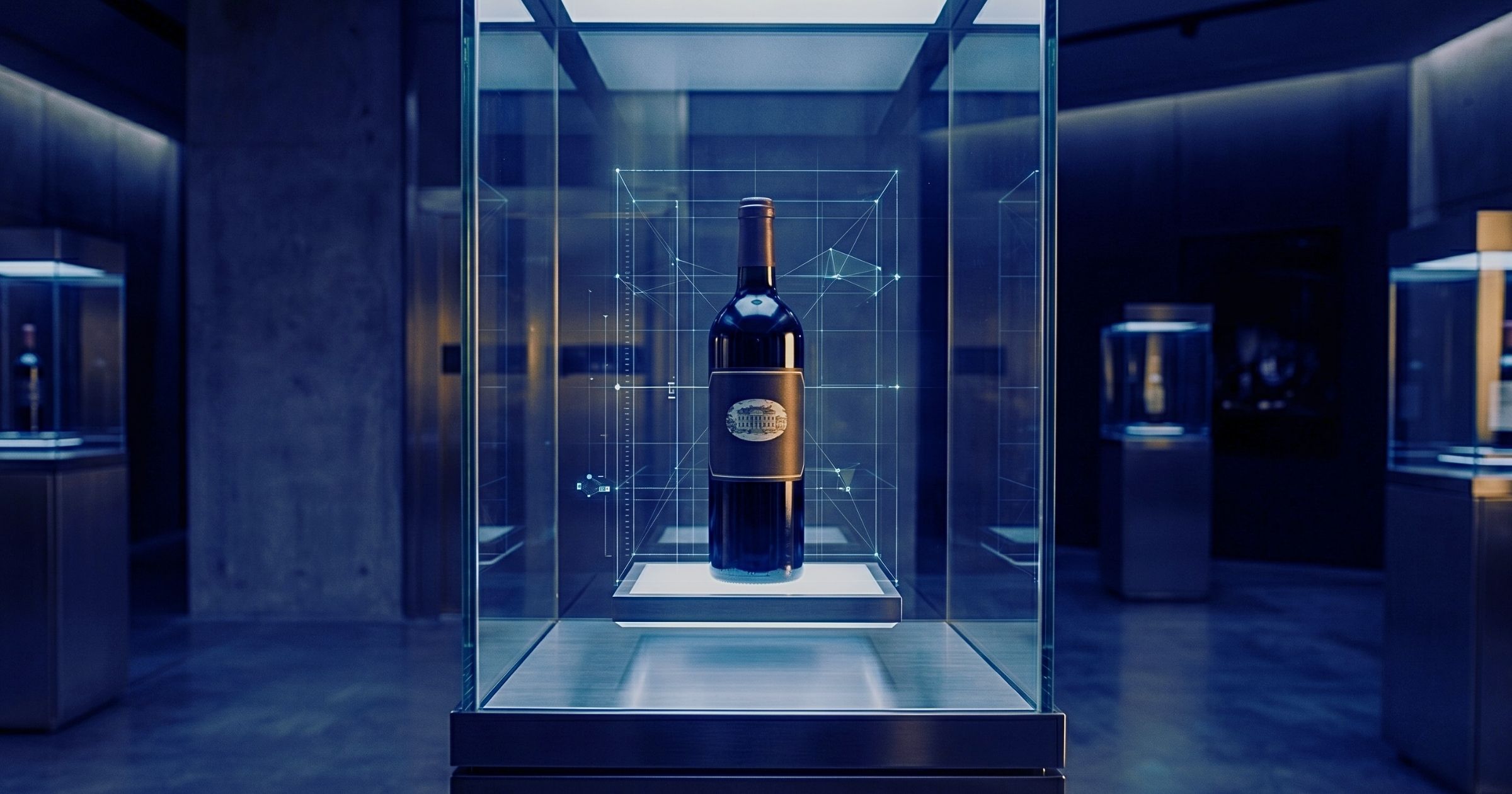
Most discussions around fine wine as an asset focus on scarcity, performance and supply constraints. These factors undoubtedly matter, but they may not tell the whole story. Fine wine occupies a unique position in society. Unlike most assets, its value is shaped not only by economics, but also by centuries of culture, ritual and human behaviour. To explore this deeper question, we asked Konstantin Kunakh, a counselling psychologist and member of the British Psychological Society, to share his perspective on why fine wine has proved remarkably enduring as a luxury asset. His argument is simple: fine wine's resilience may be rooted in something far more fundamental than market dynamics alone - human psychology.
TL;DR
Fine wine is widely regarded as a resilient asset - and rightly so. But market-based protective mechanisms, such as scarcity and liquidity, explain it only partly. There is a more fundamental layer: fine wine belongs to a rare category of goods where the impracticality of a purchase is itself a source of value. This is not a paradox, but a stable psychological mechanism - social signalling. It is precisely an understanding of how the human mind works that led Konstantin Kunakh, a counselling psychologist with over 10 years of practice and a member of the British Psychological Society, to invest in fine wine. We asked him to explain, through his distinctive lens of finding rational mechanisms behind seemingly irrational behaviors, how human nature protects fine wine as an asset.
The Logic of Luxury: Different Rules of the Game
Luxury, and fine wine is undoubtedly a luxurious purchase, plays by its own rules. Balenciaga doesn’t advertise its clothes as practical. Louboutin shoes aren’t known to be comfortable. Hublot doesn’t show time with better precision than an electronic Casio for $20 USD. Fine wine does claim to be better tasting, but even that, to a connoisseur. Fine wine is “wasted” on laymen, who can’t appreciate the complexity. So even the most basic quality of a drink - its taste isn’t, strictly speaking, the selling point. And yet, it sells, and sells great, as do all the other examples. So why do we buy them? Collective madness? A fad that pushes us out of every evolutionary imperative toward parsimony?
No. Something more interesting is going on. Most of what we do, once our vital needs are met, carries a psychological phenomenon known as social signaling.
What We Really Buy When We Buy Expensive
We don't just wear clothes; we wear clothes that declare an identity, a culture, a station. A Middle Eastern robe might be the most comfortable garment ever sewn, but no one wears one to a European office. Mongolian throat singing might be sublime, but you won't hear it in a club. Consumption is rarely just acquisition. It is also a pledge of allegiance to a culture, and a demonstration of one's place within it.
This is how social signalling works - a way of telling the world who we are and where we stand, not through words, but through choices and actions. But for a signal to work, it has to be clear. Doing things that serve other purposes, that are practical aside from symbolic, isn’t a two-for-one deal some might think. You can’t kill these two birds with one stone: do a useful thing and make it clearly a signaling gesture: one undermines the other.
This is why the logic of practical incentives inverts here. Good becomes bad. Efficient becomes wasteful. Useless becomes precious. Consider two characters: call them Jack and Jill. What does it say about Jack that he paid a hundred thousand dollars for emergency surgery that could save his life? Almost nothing. Only that he lives somewhere without universal healthcare. We can't even be sure he had the money - a man facing a serious illness will borrow, beg, or steal to pay for treatment. But if Jill paid a hundred thousand for a bottle of wine? That is a signal of extraordinary power. It means Jill had money to spend on something that wasn't strictly necessary in her life — and that this was clearly far from her last. People don't borrow for wine. The purchase works as a symbol because it isn't pragmatic.
Impracticality as a protective mechanism
The idea of social signaling can be seen in social science, economics, anthropology, and psychology, but in a strict sense, it was proposed in evolutionary biology by Amotz Zahavi in 1975 under the name of the “Handicap principle”. The peacock's tail is the canonical example.
The bird's plumage is impractical to the point of danger; the most magnificent males can barely fly. But that is the point. Being fast, strong, and large are useful traits, but they are not pure signals — you developed them to hunt, to survive. A tail so large you cannot escape a predator? That is a signal. It says: I can afford this. I am so powerful, so prosperous, that I can burden myself with a beautiful impediment and still thrive.
Once you see this pattern, you see it everywhere. Every rite of passage demands a sacrifice. You cannot become a monk without vows. You cannot marry without surrendering options. You cannot celebrate properly without special, uncomfortable, expensive clothes. And, of course, without expensive wine.
Wine occupies a rare category of goods in which the cost-to-value relationship is inverted - it’s a luxury. For most things - meat, flight tickets, books - an item costing X is more desirable than one costing 10X. With fine wine, the opposite holds. In ordinary markets, the price is what you subtract from the value to decide whether a purchase makes sense. With luxury wine, the price is part of the value itself. It is one thing to drink good wine. It is quite another to drink good and expensive wine.
Fine wine is largely insulated from the turbulence of the broader economy - not immune to inflation or recession, but governed by a different logic. As a bottle becomes scarcer and more expensive in relative terms, its value as a symbol intensifies, and so does the demand for it.
Production in Burgundy's finest appellations is physically fixed and cannot be expanded. Age makes a bottle unrepeatable. Each of these factors compounds the wine's value as a signal - and therefore its value on the market. This is why fine wine behaves unlike almost any other asset. The market does not punish wine for being impractical; it rewards it.




Capital is at risk. Wine values can go down as well as up, and investments may not perform as expected. Returns may vary. You should not invest more than you can afford to lose. WineFi is not authorised by the Financial Conduct Authority. Investments are not regulated and you will have no access to the Financial Services Compensation Scheme (FSCS) or the Financial Ombudsman Service (FOS). Past performance and forecasts are not reliable indicators of future results and should not be relied on. Forecasts are based on WineFi’s own internal calculations and opinions and may change. Investments are illiquid. Once invested, you are committed for the full term. Tax treatment depends on individual circumstances and may change.
You are advised to obtain appropriate tax or investment advice where necessary.
WineFi is a trading name of WineFi Management Limited. Registered in England and Wales with registration number: 14864655 and whose registered office is at 5th Floor, 167-169 Great Portland Street, London, United Kingdom, W1W 5PF.