



TL;DR
Investing in Piedmont fine wine in 2026 means focusing heavily on Barolo and Barbaresco, regions defined by severe structural scarcity and increasing global demand. As Italy's most established investment territory outside Tuscany, Piedmont has matured into a credible long-term play. Success requires targeting blue-chip producers like Giacomo Conterno and Bruno Giacosa, acquiring wines during their optimal 6 to 9 year entry window, and insisting on perfect bonded provenance.
Why Piedmont Fine Wine Demands Investor Attention in 2026
Piedmont has evolved from a niche collector's market into one of the world's most important fine wine investment regions. Defined by tiny production volumes, strict DOCG regulations and wines with exceptional ageing potential, the region benefits from a powerful combination of limited supply and growing global demand.
The foundation of Piedmont's investment appeal is structural scarcity. Barolo, the region's flagship wine, is produced from just 2,100 hectares of vineyards, a fraction of the size of many major French appellations. Supply cannot meaningfully increase due to geographical and regulatory constraints, while every bottle consumed further reduces the availability of mature vintages. This creates a natural scarcity that supports long-term price appreciation.
Piedmont also provides valuable diversification within a fine wine portfolio. While Bordeaux and Burgundy have traditionally dominated the market, Barolo and Barbaresco are influenced by different growing conditions and buyer demand, meaning their prices do not always move in line with French wines. Adding Piedmont can therefore help reduce concentration risk while increasing exposure to Italy's highest-quality wines.
Although Tuscany has delivered stronger average returns in recent years, largely due to lower volatility, Piedmont has produced a much higher proportion of wines generating double-digit annualised returns over a 10-year period. This highlights an important point: success in Piedmont depends far more on selecting the right wines than simply buying the region.
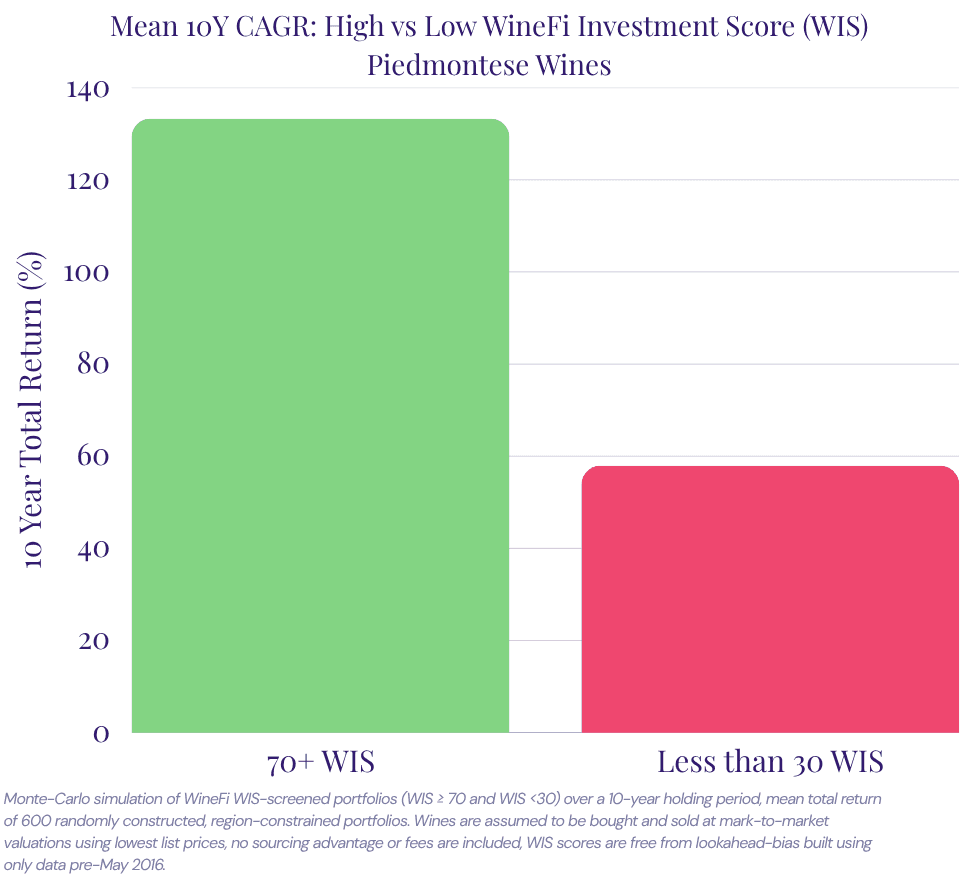
Our own research supports this. Back-testing using WineFi's proprietary Wine Investment Score (WIS) shows that Piedmont wines scoring above 70 generated more than twice the returns of lower-scoring wines. This demonstrates the value of a disciplined, data-driven approach to wine selection.

The region has also benefited from a significant improvement in quality and international recognition. Since 2003, average critic scores have risen across the fine wine market, but Tuscany and Piedmont have improved even faster. By 2025, both regions averaged almost 95 points from leading critics, more than one point above the global average. Over the same period, Italy's share of global fine wine reviews nearly tripled, reflecting its growing importance among critics and collectors.
The combination of exceptional quality, increasing international attention and permanently limited supply continues to make Piedmont one of the strongest long-term opportunities in fine wine investment.
How Does the Barolo Investment Market Actually Work?
Barolo operates as the undisputed engine of Piedmont wine investment. Regulated by stringent DOCG laws, standard Barolo requires a minimum of 38 months of aging before release, ensuring wines enter the market with established maturity. This extended timeline limits immediate supply and places a premium on top vintages. For investors, understanding the varied terroir is critical.
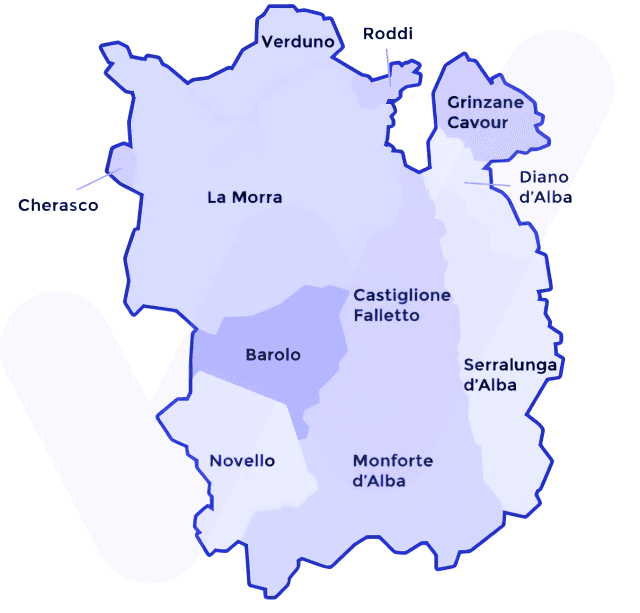
The Barolo zone is composed of 11 specific communes, though five core villages dominate the investment landscape: Barolo, La Morra, Castiglione Falletto, Serralunga d'Alba, and Monforte d'Alba. The soils here are broadly divided into two geological types. The younger Tortonian soils of La Morra and Barolo typically produce more fragrant, elegant wines with finer tannins that become approachable sooner. By contrast, the older Serravallian soils of Serralunga d'Alba and Monforte d'Alba produce more powerful, structured wines with firmer tannins that generally require longer ageing. Knowing exactly what is investment grade wine in this context means understanding how these soil types dictate a wine's aging curve and secondary market appeal.
The market has also benefited immensely from the resolution of the historical stylistic debates. In previous decades, traditionalists and modernists clashed over maceration times and the use of new oak. Today, the region has largely synthesised the best of both approaches, resulting in a level of consistency and quality that gives institutional and private buyers tremendous confidence. This reliable quality floor is essential for maintaining liquidity across different global exchanges.
Barbaresco vs Barolo: Which Offers Better Returns?
While both Barolo and Barbaresco are crafted entirely from the Nebbiolo grape, their investment profiles differ based on structure and market perception. Barolo typically commands higher secondary market prices due to its robust tannins and longer mandatory aging periods, making it the primary target for capital allocation. Barbaresco offers selective opportunities through elite producers who have elevated the region's status globally.
Barbaresco is situated slightly lower in altitude and closer to the Tanaro River, resulting in a slightly warmer microclimate that ripens the Nebbiolo grape earlier. The DOCG regulations require only 26 months of aging prior to release. Consequently, Barbaresco is generally more approachable in its youth, displaying immense elegance and refinement. However, because its overall aging potential is sometimes perceived as shorter than that of Barolo, the secondary market depth is narrower.
For investors aiming to build out the best wine regions for investment, Barolo remains the anchor asset within Piedmont due to its superior trade volume and global recognition. Yet, ignoring Barbaresco completely is a mistake. Blue-chip Barbaresco producers have demonstrated an ability to generate substantial alpha, often trading at lower initial entry points while delivering impressive percentage gains as the wines enter their drinking windows. Prudent portfolio construction usually weights Barolo heavily while utilizing top-tier Barbaresco for targeted growth.
Who Are the Blue-Chip Producers in Piedmont?
Outcomes in Piedmont depend heavily on producer selection rather than simply buying broad regional exposure. The market is highly concentrated around a small tier of historic names whose brand equity guarantees secondary market liquidity. Producers such as Giacomo Conterno, Bruno Giacosa, Bartolo Mascarello, and Angelo Gaja form the backbone of an investment-grade Piedmont portfolio.
The disparity between average returns and individual portfolio outcomes is incredibly wide in fine wine. Buying a generic DOCG Barolo does not replicate the performance of the leading indices. True capital appreciation is driven by acquiring wines from estates that global collectors actively compete for at auction and through merchant networks.
Giacomo Conterno's Monfortino Riserva is perhaps the ultimate example of Piedmont investment pedigree, frequently commanding thousands of pounds per bottle and trading with the same global liquidity as top French assets. Similarly, the single-vineyard expressions from Bruno Giacosa and the fiercely traditional wines of Bartolo Mascarello enjoy persistent international demand. Angelo Gaja has single-handedly raised the profile of Barbaresco, creating wines that rank among Italy's most valuable. Beyond these titans, a secondary tier of highly respected producers, including Pio Cesare and Elio Altare, offers excellent liquidity and robust performance metrics. Our quantitative models consistently screen for these specific liquidity characteristics before considering any asset for allocation.
What is the Optimal Holding Period for Piedmont Wine?
The optimal entry window for investment-grade Piedmont red wine is typically between 6 and 9 years of age. During this phase, wines begin to approach their drinking windows, driving up demand as bottles are consumed and scarcity increases. However, predicting exit timing becomes unpredictable after 20 years of age.
Fine wine produces no yield, meaning returns depend entirely on selling the asset at a higher price than the acquisition cost. The Nebbiolo grape possesses some of the highest tannin and acidity levels in the wine world, requiring significant time to soften and integrate. Consequently, young Barolo is rarely consumed immediately upon release.
As these wines cross the decade mark, they enter a phase of accelerated appreciation. Restaurants, hotels, and private collectors seek mature stock that is ready to drink, creating a surge in demand against a diminishing supply. WineFi's models are built precisely around capturing this dynamic, favouring holding periods that target this high-growth phase. Holding a wine forever is not a strategy; capturing the steepest part of its appreciation curve and exiting before liquidity thins is the hallmark of professional management. This disciplined approach aligns closely with understanding fine wine market cycles.
How Have Piedmont Wines Performed in Recent Market Cycles?
Piedmont has demonstrated remarkable resilience during recent market corrections, outperforming many traditional assets. Following the peak of 2022, the fine wine market experienced a substantial digestion period. Yet, heading into 2026, Italian wines, led by Barolo and top Tuscans, have shown strong early recovery signals.
The broader fine wine market underwent a necessary adjustment between 2023 and 2025, driven largely by aggressive interest rate hikes that suppressed demand for non-yielding assets. During this period, the Liv-ex Fine Wine 1000 index recorded declines, and liquidity tightened. However, Piedmont proved to be a relative safe haven compared to highly speculative segments of the market.
By early 2026, the Liv-ex 100 registered six consecutive months of positive gains. Data indicates increasing bid-to-offer ratios specifically for Italian labels, confirming that buyers are actively acquiring top vintages at current valuations. This fundamentals-led recovery suggests that Piedmont is currently offering one of the most favourable entry points in recent years. Investors looking to diversify away from French volatility frequently compare this stability to the dynamics seen when deciding how to invest in Burgundy wine 2026 or how to invest in Champagne 2026.
How to Secure Provenance and Liquidity in Italian Wines
Provenance dictates value in the secondary fine wine market. For Piedmont wines to retain their investment premium, they must be stored continuously in a government-approved bonded warehouse. Any break in this chain of custody severely impairs liquidity and resale pricing.
Because fine wine is an unregulated physical asset, trust is paramount. Buyers must be absolutely certain that a bottle of 2016 Barolo has been kept in pristine conditions, with regulated temperature, humidity, light, and vibration. If a wine leaves a bonded warehouse and enters a private home cellar, that certainty is lost forever. The secondary market enforces a strict penalty for this uncertainty, often rejecting the wine entirely or demanding deep discounts.
Furthermore, holding wine "in bond" means that VAT and excise duty remain suspended. For investors focused on capital efficiency, this is a significant advantage. The UK offers an additional structural benefit for this asset class. Fine wines with a predictable drinking lifespan of less than 50 years are typically classified as wasting assets. Understanding the mechanics of the UK wine investment tax guide is crucial for maximizing net returns, as this classification generally exempts the investment from Capital Gains Tax.
How Piedmont Wine Connects to Your Portfolio
Piedmont offers investors a scarce, culturally durable real asset that performs independently of mainstream financial markets. By focusing on blue-chip Barolo and Barbaresco producers, maintaining strict price discipline, and ensuring perfect bonded provenance, investors can capture the long-term appreciation inherent in Italy's finest terroir.
WineFi applies systematic, data-driven selection to identify the most compelling opportunities within Piedmont and beyond. If you are ready to construct a diversified, tax-efficient fine wine portfolio, sign up to view our current investment opportunities or explore our methodology in the 2026 Fine Wine Investment Guide.
Frequently Asked Questions
Is Barolo a good investment in 2026?
Yes, Barolo presents a strong investment case in 2026. The market has corrected from its 2022 peaks, offering favourable entry prices. Combined with structural scarcity and increasing global demand, top-tier Barolo from blue-chip producers provides excellent potential for medium to long-term capital appreciation.
What is the difference between Barolo and Barbaresco for investors?
Barolo generally offers deeper secondary market liquidity, higher average price points, and longer aging potential, making it the foundation of a Piedmont portfolio. Barbaresco is produced in smaller quantities and matures slightly faster, offering targeted growth opportunities primarily through a select group of elite producers.
How long should I hold Barolo wine?
The optimal holding period for investment-grade Barolo is typically 4 to 7 years from the point of acquisition. Data shows that entering the market when a wine is 6 to 9 years old and exiting before it reaches 20 years old captures the most reliable phase of price appreciation.
Are Piedmont wines exempt from Capital Gains Tax in the UK?
In most cases, yes. The UK generally treats fine wine with a predictable drinking life of under 50 years as a "wasting asset," which typically makes it exempt from Capital Gains Tax (CGT). This applies to the vast majority of investment-grade Barolo and Barbaresco held in private portfolios.
Which vintages of Barolo are best for investment?
Investment outcomes rely heavily on vintage quality. Recent exceptional vintages that command strong secondary market premiums include 2010, 2013, 2016, 2021. However, investors must still apply strict valuation metrics, as overpaying for a great vintage nullifies future returns.
How does the WineFi Investment Score (WIS) evaluate Piedmont wines?
The WineFi Investment Score (WIS) analyses over 38 variables, including long-term price trends, critic scores, producer track records, and market liquidity. The model identifies Piedmont wines that are currently undervalued relative to their efficient market price and forecast to appreciate over a four-year horizon.
Do I need to take physical delivery of my Barolo investment?
No. To preserve maximum resale value and liquidity, investment-grade wine must remain in a government-approved bonded warehouse. Taking physical delivery triggers VAT and duty charges and breaks the verifiable chain of provenance, which severely limits your ability to sell the wine later.
This article is provided for general information and is not personal tax or investment advice. Capital is at risk. Wine values can go down as well as up, and investments may not perform as expected. Returns may vary. You should not invest more than you can afford to lose. WineFi is not authorised by the Financial Conduct Authority. Investments are not regulated and you will have no access to the Financial Services Compensation Scheme (FSCS) or the Financial Ombudsman Service (FOS). Past performance and forecasts are not reliable indicators of future results. Investments are illiquid. Tax treatment depends on individual circumstances and may change. You are advised to obtain appropriate tax or investment advice where necessary. WineFi is a trading name of WineFi Management Limited.




Capital is at risk. Wine values can go down as well as up, and investments may not perform as expected. Returns may vary. You should not invest more than you can afford to lose. WineFi is not authorised by the Financial Conduct Authority. Investments are not regulated and you will have no access to the Financial Services Compensation Scheme (FSCS) or the Financial Ombudsman Service (FOS). Past performance and forecasts are not reliable indicators of future results and should not be relied on. Forecasts are based on WineFi’s own internal calculations and opinions and may change. Investments are illiquid. Once invested, you are committed for the full term. Tax treatment depends on individual circumstances and may change.
You are advised to obtain appropriate tax or investment advice where necessary.
WineFi is a trading name of WineFi Management Limited. Registered in England and Wales with registration number: 14864655 and whose registered office is at 5th Floor, 167-169 Great Portland Street, London, United Kingdom, W1W 5PF.